Secrets and credentials
Catch exposed keys and tokens before they reach a repository.
Ship Safe scans the agents, MCP servers, and AI code your app actually runs — locally, in one command.
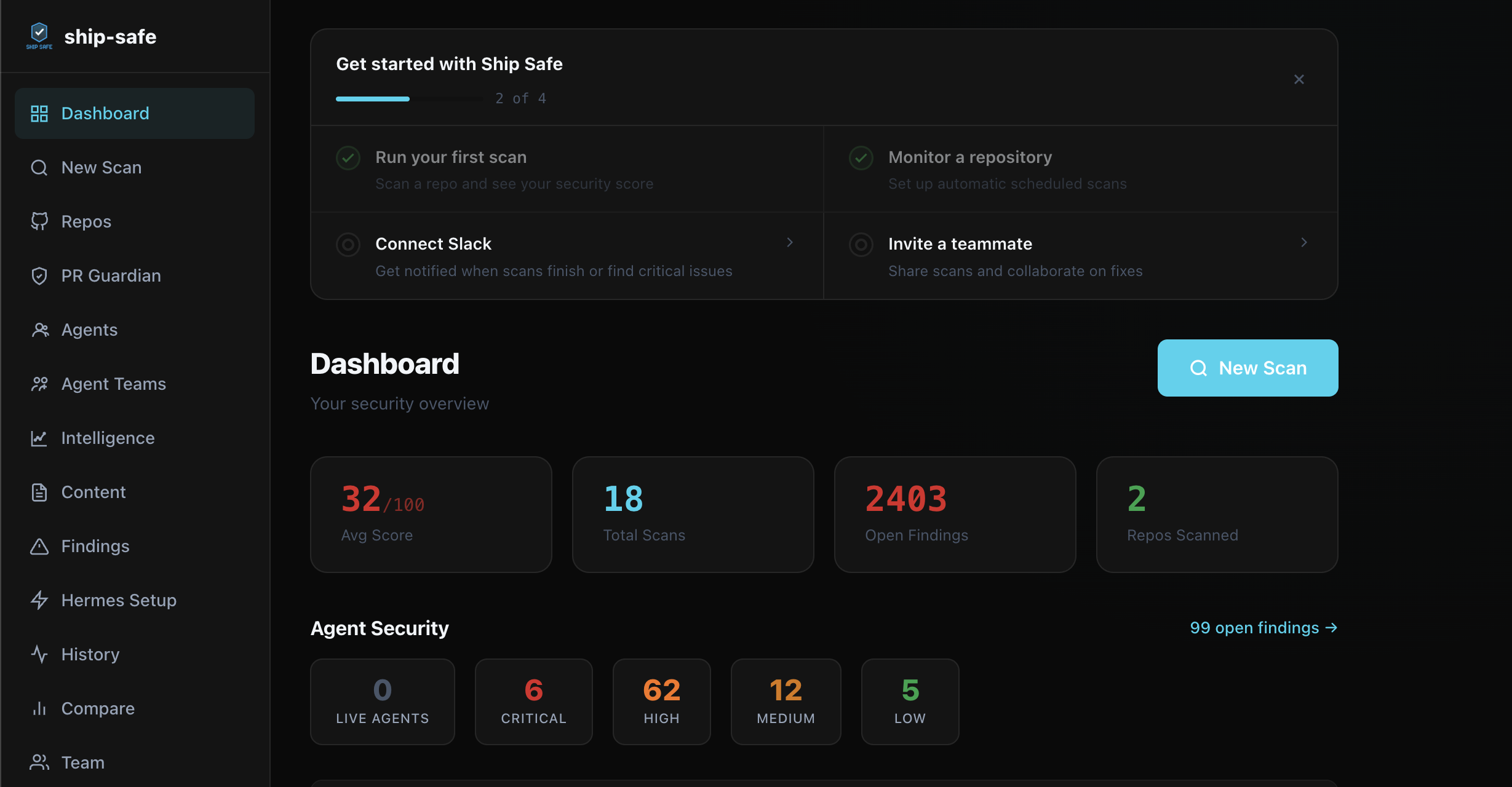
Start with the checks that matter to your application, agent runtime, and release process.
Catch exposed keys and tokens before they reach a repository.
Surface vulnerable packages and risky install defaults.
Review transports, allowlists, and agent tool boundaries.
Trace untrusted input into prompts, models, and tool calls.
Turn findings into checks and thresholds your pipeline enforces.
Probe agent behaviour with adversarial scenarios when you need depth.
The benchmark is twelve paired scenarios — one vulnerable case and one safe control each. Twelve is a small corpus, so here are all twelve rather than a percentage.
Ship Safe meets developers where the work already happens, then turns a noisy scan into a decision your team can act on.
Run one command against a local repository. No account, API key, or upload is required for the core scan.
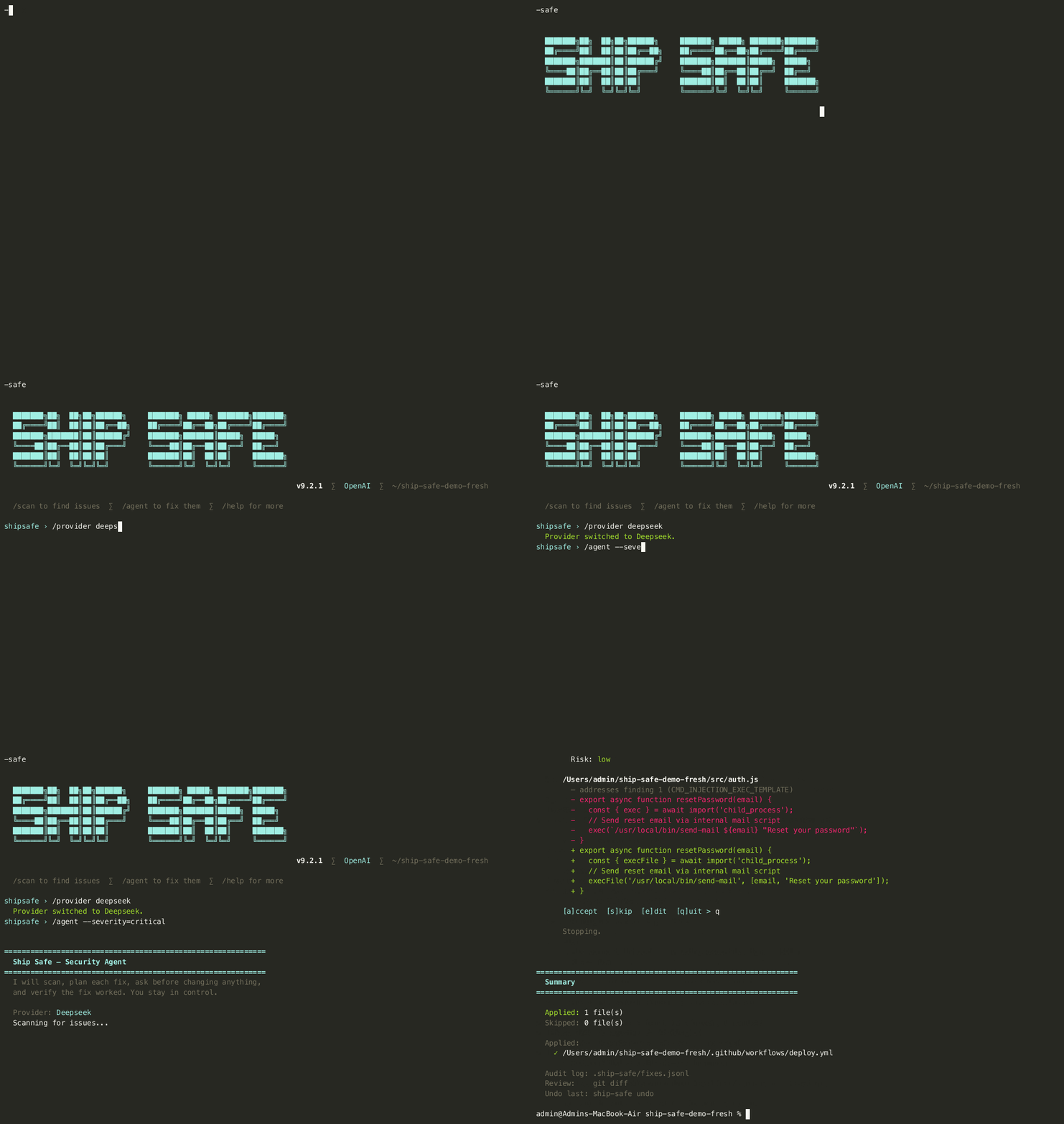
Move past a flat list of warnings. Findings are grouped by severity, confidence, and the context that makes them actionable.
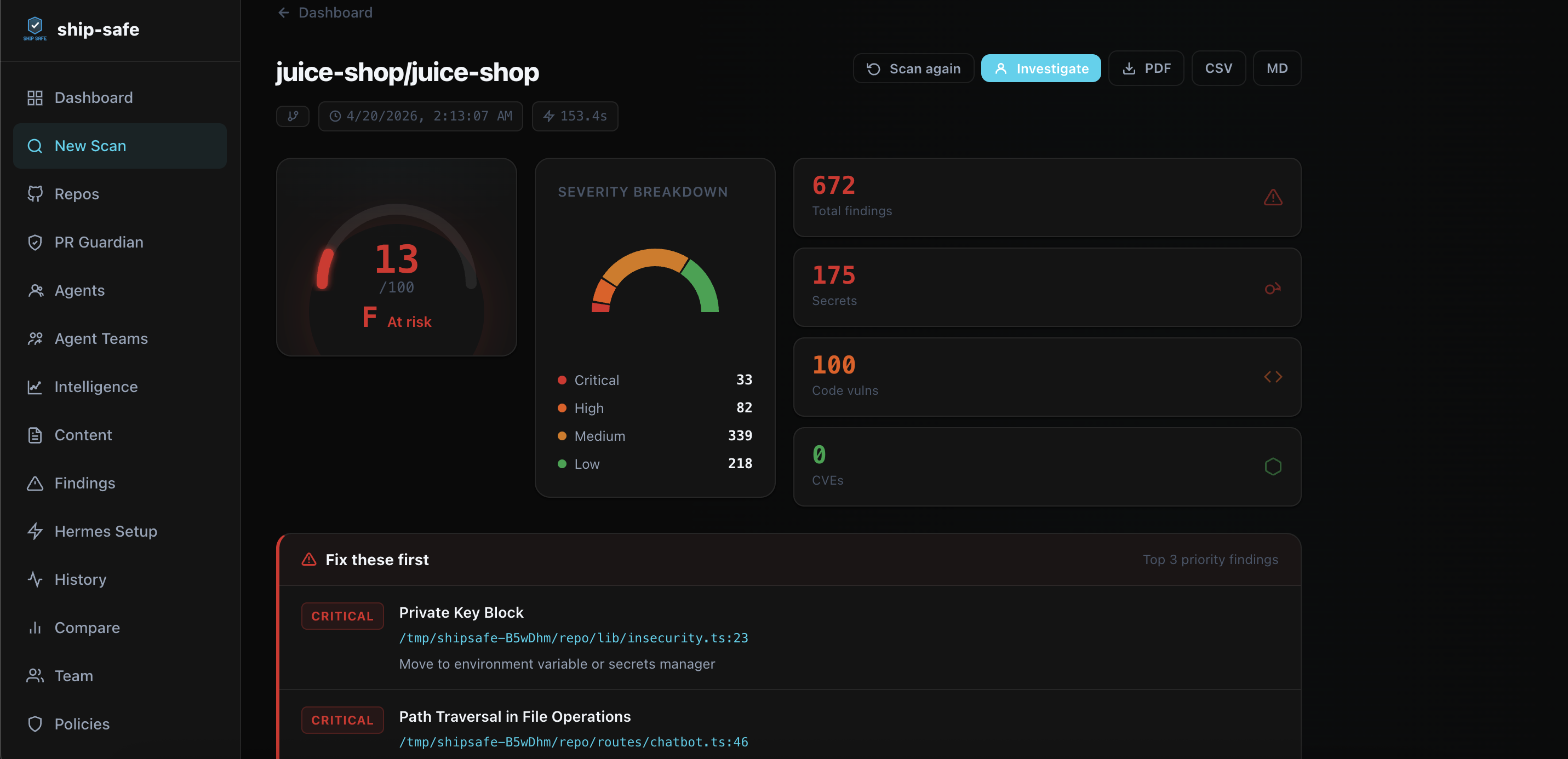
PR Guardian puts the finding, affected code, and fix guidance inside the review your team is already reading.
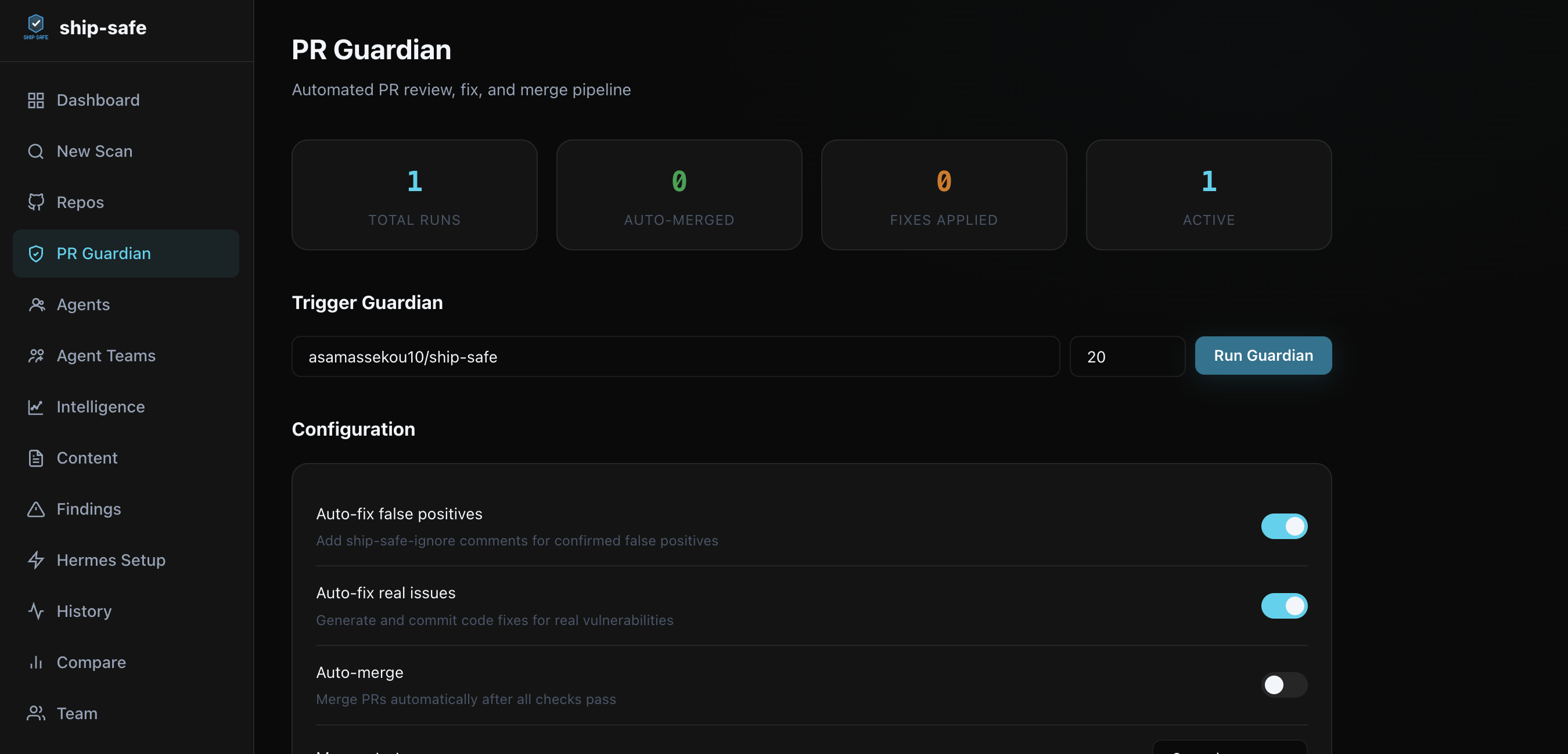
Open a pull request and Ship Safe posts one comment containing two reviews: the deterministic scan, and a Kimi K3 read of the same diff for the judgement calls a rules engine cannot make.
Secrets            0
Vulnerabilities    0
Changed-file scan  100/100 (A)

### Kimi K3 triage
Docs-only PR adding a paragraph documenting the large-repository
scan limit. No deterministic candidate findings were supplied and
no executable code changed, so there is nothing to confirm or
dispute.

> Advisory context only (high confidence). The Ship Safe scan
> remains the source of truth.
Deterministic findings run on every pull request and remain authoritative. Kimi comments alongside them and can dispute a finding in writing — it cannot suppress one.
Not a trial that expires. Paid plans continue past the allowance, and running out never affects your deterministic scans.
If the model call fails, times out, or returns nothing, the credit goes back and the comment says what happened.
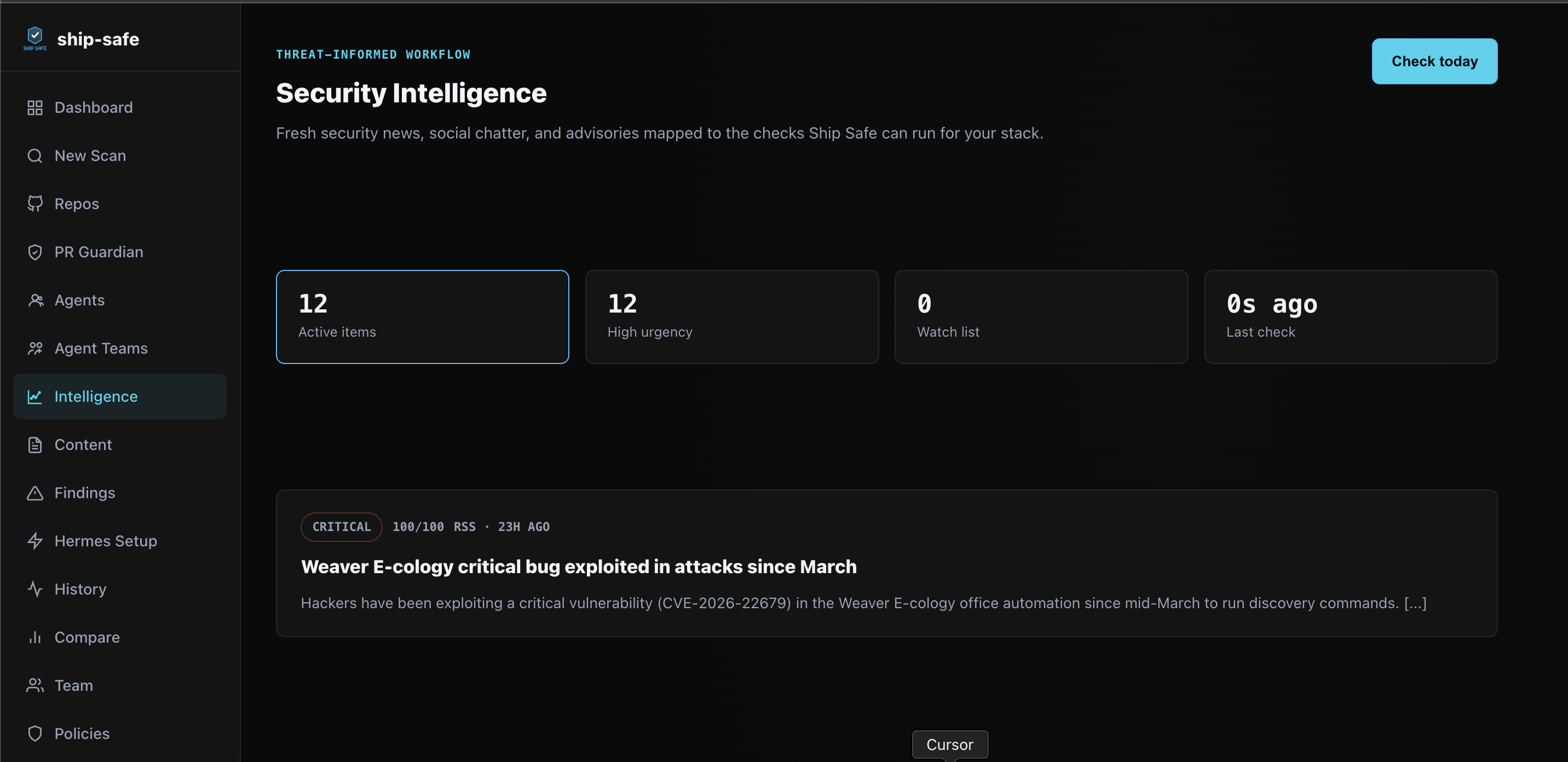
Security does not end at the repository. Review agent orchestration, tool permissions, and long-context behavior before they become production incidents.
Specialized agents hand work to each other with explicit boundaries, so each one sees the context it needs and nothing more.
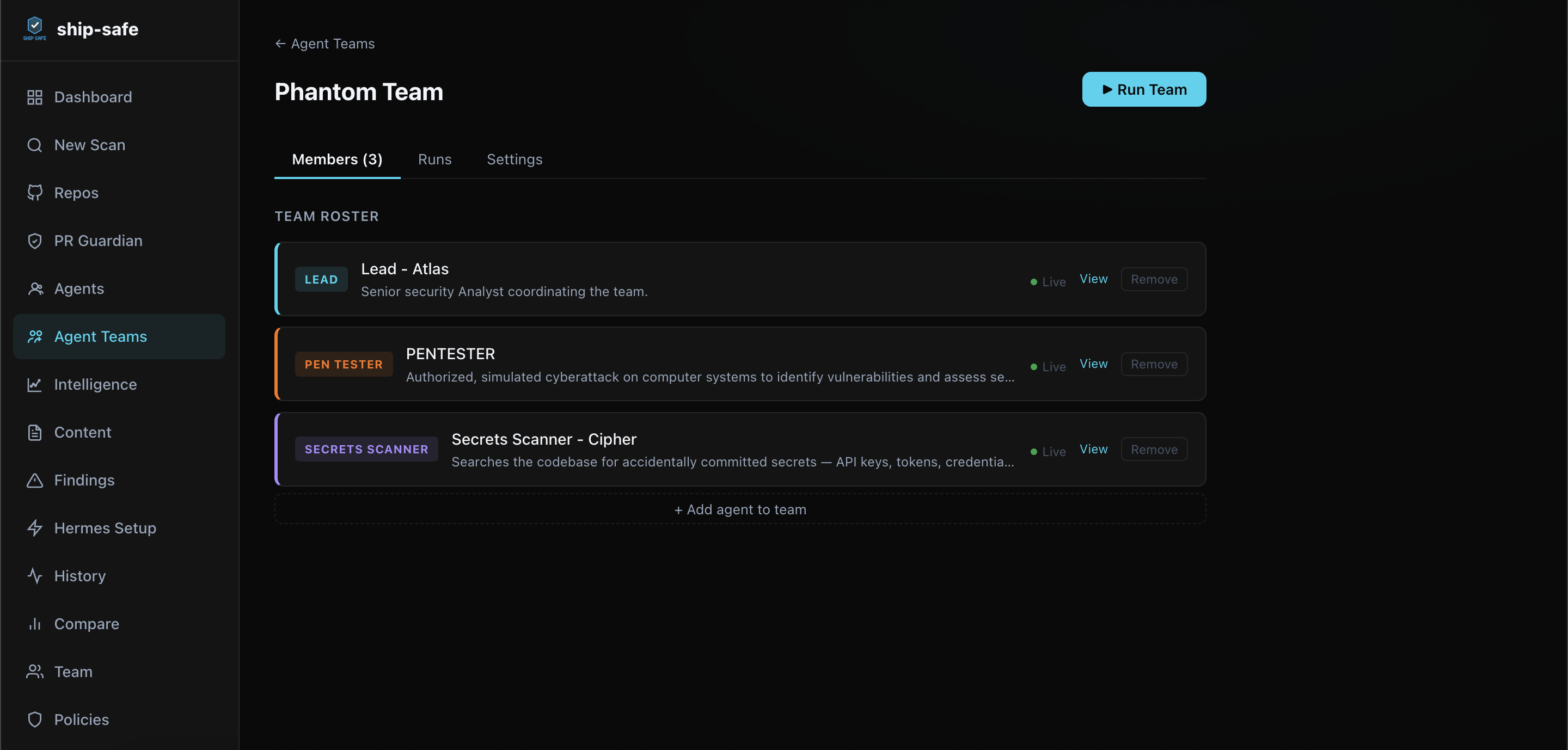
Fresh CVEs and exploit context arrive already connected to the technologies you actually ship, so triage starts with what applies to you.
$ npx ship-safe red-team . --no-aiSee the red-team workflow One tool for the developer at the keyboard, the team operating agents, and the security lead setting the bar.
Catch the risky default before it becomes a review comment or a production incident.
Run locallyUnderstand how agents, MCP servers, tools, and model integrations change your attack surface.
Explore agent securityGive every repository a repeatable baseline with evidence that fits existing CI workflows.
See the security modelInteresting!
 TekniumCofounder and Lead Engineer, Hermes Agent at Nous Research
scanning agent configs for vulnerabilities before deploy is exactly the gap in the current toolchain. most teams don't even audit their MCP tool permissions until something breaks in prod. security-left for agents is a real market.
 Saeed AnwarBuilder
22 parallel agents for security is wild. i've been chaining agents for prompt debugging and even 2 talking to each other gets chaotic. curious how they handle conflict when agent 12 says safe and agent 17 says vulnerable.
 Youssef Toufik@im_ytoufik
Ship Safe v9.7.4 should make MCP findings replayable: package version, scanner rule, tool name, permission edge, diff path, severity, and fix verdict. Agents can refuse a risky tool call before the risky code becomes a weekend.
 Axiom@AxiomBot
Treating existing issues as baseline and focusing on regressions sounds practical
 Kumuj@KumujJain
Ship Safe looks like exactly what solo devs need!
 Helder Perez@helderbuilds
super useful tool!
 Krish@krishcdbry
This is nuts!! haha
 kavokie@KavokieKavokie
This is awesome Abbaas! finding vulns ahead of attackers is the real muscle for today
 PrismorAI agent security platform
The useful part here is parallelizing the boring checks without losing a single output surface. Security tooling usually dies in handoff hell. If this keeps findings readable, that's the win.
 Gerald Sterling@geraldrsterling
this is a real and nasty vulnerability. glad someone's finally building a proper open source scanner for it.
 Pranav Malhotra@PranavMalhlz
approval gates are a lifesaver... learned that the hard way when my bot almost posted something wild during testing
 Johnny Nel@johnnynelai
That’s the part that matters. Faster models only help if the workflow doesn’t eat the savings.
 Devin Kairo@DevinC743
Love ship-safe, locking down MVPs with style
 Finance Wisdom@Financewisdom01
You're doing an awesome job for the dev community!
 Prismor@prismor_dev
Impressive
 John Shina@JohnShina91
Public posts shown with attribution. Select a card to view the original post on X. Hover or focus a card to stop the row.
The scanner stays free. Paid plans add the hosted tools that help teams keep moving.
Unlimited local scans and CI-ready security output.
Hosted history, private repos, reports, and PR Guardian.
Shared visibility for teams that review each other’s code.
Ship Safe works against the config that is in the repository — no runtime agent, no proxy, nothing to install in production.
Scans agent definitions, permission policies, and hooks before they run.
.claude/ · settings.jsonChecks transports, allowlists, and tool permissions across every configured server.
mcp.json · server configsRuns in CI with threshold gating, and posts findings straight onto the pull request.
ship-safe ci --thresholdReviews the rules, prompts, and generated code that AI editors leave in the repository.
.cursor/rules · AGENTS.mdHardens configs automatically, and scans a skill before you install it.
ship-safe scan-skillExports findings to the GitHub Security tab or any SARIF-aware pipeline.
--format sarif--no-ai to keep scanning fully local. See the security and data-flow details.Ship Safe is MIT open source. Add agents, MCP rules, fixtures, docs, CI examples, and dashboard improvements.
Run locally for free, then add the cloud when your team needs history and automation.
npx ship-safe scan